Facebook
YouTube
Instagram

An architectural facelift underway in downtown Davenport seeks to return one of the Midwest’s oldest art houses to vintage glory as a new generation of Quad Cities tradesmen leave their mark on the building.
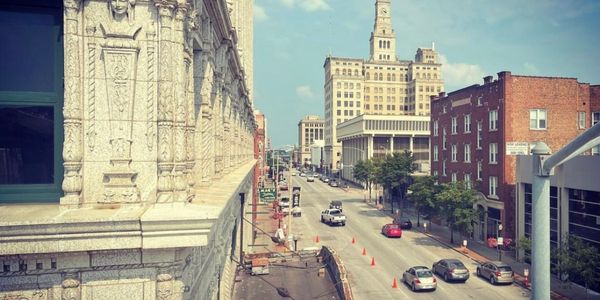
The historic 10-story Kahl Building at 3rd and Ripley streets is being converted to 65 apartments, and housed inside is the opulent Capitol Theatre, famous for being one of the last concert stops on the Buddy Holly-Big Bopper-Ritchie Valens tour before their tragic plane crash in 1959. Vaudeville shows and a wide variety of famous musicians also performed on its stage over the decades, but restoration of the roaring 20's era theatre has been no easy task.
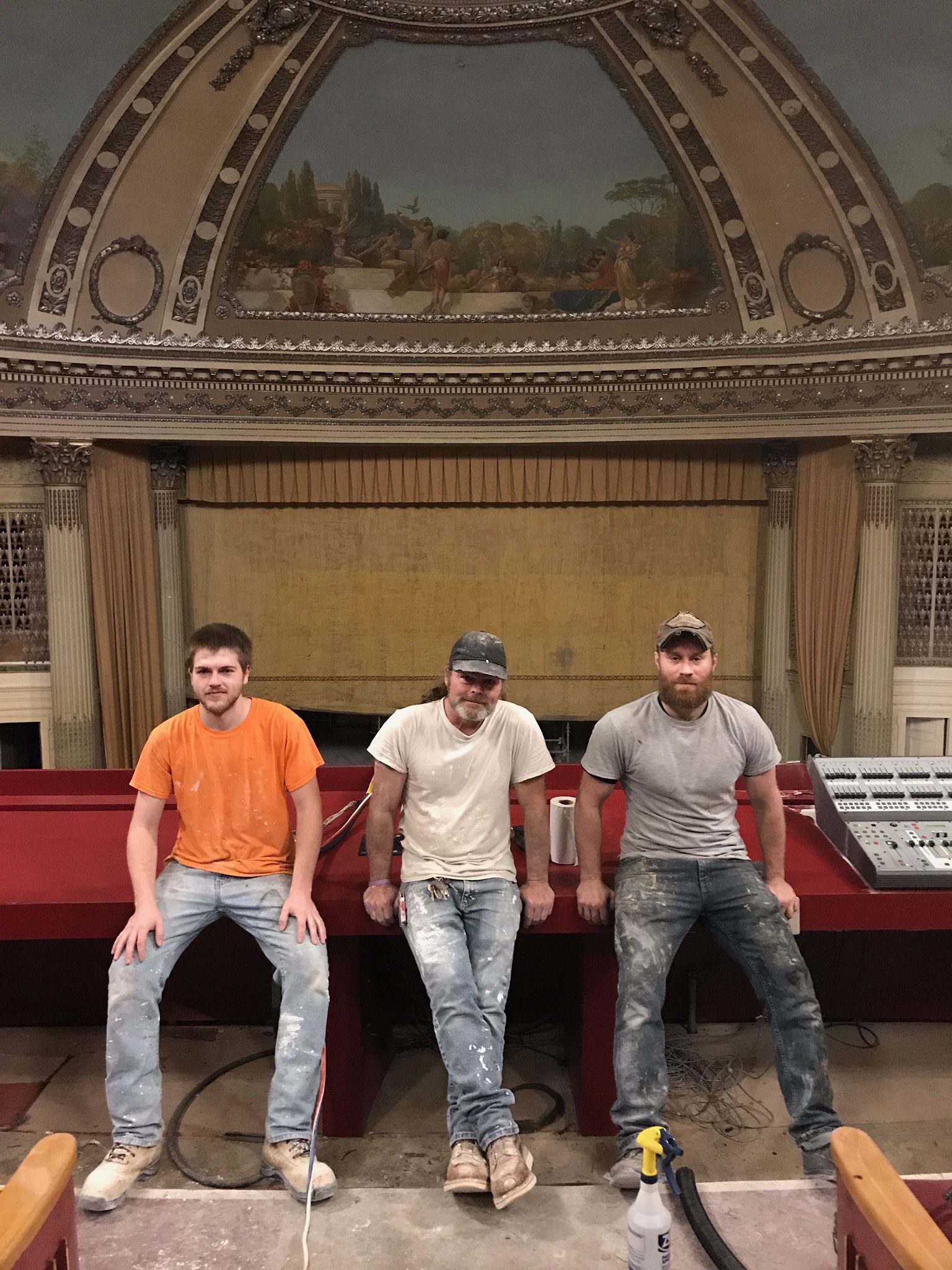 “It’s an undertaking,” said Chris Ales, who is managing the $25 million renovation for JNB Capitol Building of Bettendorf.
The project began early in 2020. The COVID-19 pandemic slowed but did not stop work being done to repair and restore the theater, mezzanine, storefronts and upper floors. An operator for the theater has yet to be announced.
“Think about who in their right mind would undertake a renovation of a theater in the midst of a pandemic,” Ales said. “But at that stage we already had one foot in the boat and it was ready to set sail. At that point we had to persevere, and now we’re on the back side of it.”
The entire restoration has been delicately handled by a dedicated team of Quad Cities artisans.
For this project, local artist Tony Cavallo spent nearly three years climbing several stories of scaffolding and hanging nearly upside down from the theater's high arched ceiling like Michelangelo painting the Sistine Chapel.
“It’s wild spending time in a building like this,” Cavallo said.
A lift raises him 60 feet to the hardest to reach heights. “When you get up on a lift you grip it really tight on the way up there,” Cavallo said.
To hone his craft, the professional oil painter said he spent years experimenting, reading old books and trying to master techniques. The theater and building present his most immense canvas and the one in most disrepair. “I’ve definitely become an expert on decay,” he said. “To be a master artist, you’ve got to study nature, and decay was the nature of this building.”
His aim isn’t to paint over decades-old layers but to preserve what is original and make it fresh again.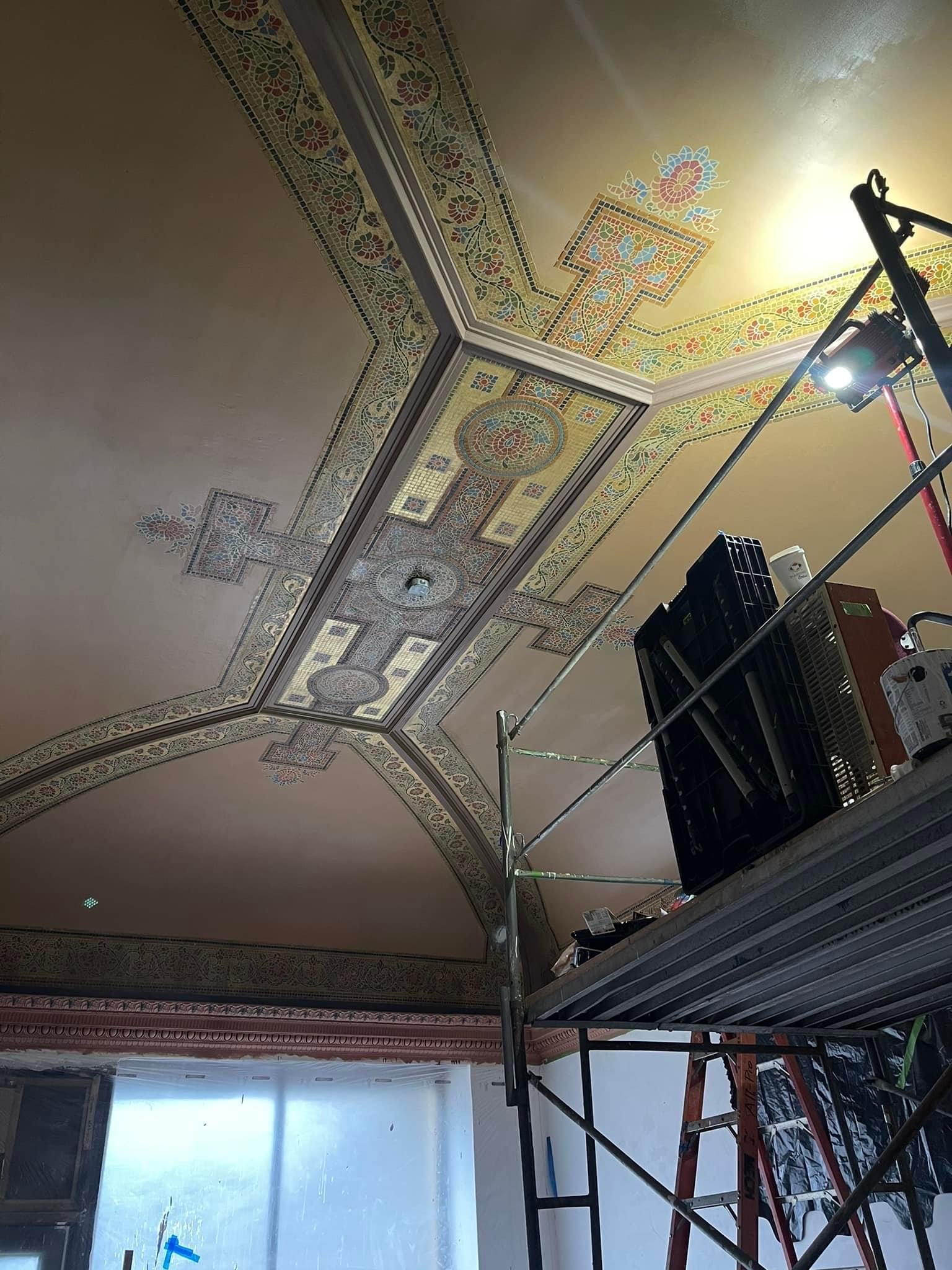
“We made it look like it never got touched in 100 years,” Cavallo said. “We’re making this brand spanking old.”
The steel-framed high rise clad in white stone and terra-cotta was constructed in 1920 to accommodate the growing need for office space downtown, and the theater officially opened Christmas day of that year. Standing 146 feet tall, the Kahl’s Neo-Classical design was inspired by prominent skyscraper builders of the time like Chicago’s Louis Sullivan.
For most of the century the Capitol was a state-of-the-art movie palace with seating for 2,500 guests, a Wicks pipe organ with 700 pipes, a lobby with staircases and walls of marble, bronze and copper doors, a gold elevator, numerous chandeliers and ornate decorating throughout.
Anyone touring the building’s interior three years ago would have discovered water-damaged plaster throughout and even whole chunks missing. Local plasterers Corey Wallace and his son Ethan were tasked with the repairs by making silicone molds from still-intact plaster pieces. Their efforts included restoring a gigantic ceiling medallion that had partially deteriorated and fallen out.
“It’s like the world’s biggest jigsaw puzzle, but you have to make your own pieces,” Wallace said.
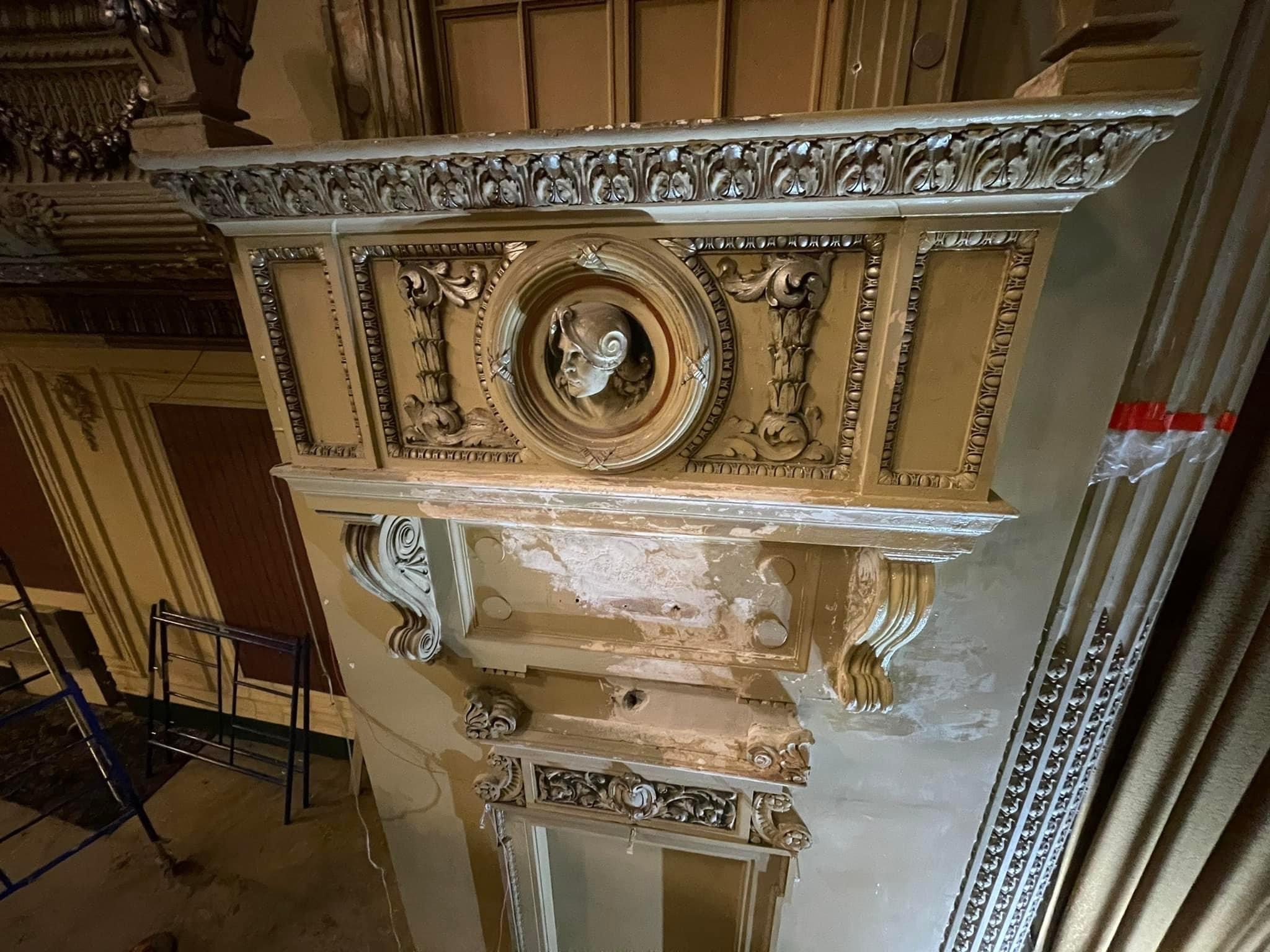 The artists are in awe of the handcrafted detail that went into the original structure.
“We’re preserving as much as humanly possible what’s there and not recreate it from scratch,” Wallace said. “This is restoration and preservation because it has historical value.”
Ales said the building is being renovated following the National Park Services historic standards. The building, including the theater, joined the National Register of Historic Places in 1983.
“When Henry Kahl built the theater, he built it to rival any outside New York,” Ales said. “I think he accomplished that. It’s not every day you get to work with these kinds of materials.”
Ales called the Kahl Building “one of the nicest” in the Quad Cities. “It’s a beautiful building that speaks for itself,” he said. “If you look at the architectural features, it’s unparalleled in the Midwest.”
The restoration of the theater is expected to be completed by the end of the year. The ornate-looking storefronts, which once housed a cigar shop, furrier and law offices, are being reconfigured into restrooms and additional concession space for theater-goers as well as the addition of a green room where performers can relax.
“The star of the show is the craftsmanship itself and the fact that the people doing work of this caliber and difficulty are from the Quad Cities,” said Kyle Carter, executive director of the Downtown Davenport Partnership and Quad Cities Chamber VP, Place Management.
Their fingerprints on this historic treasure will forever represent a celebration of what our own workforce is capable of when provided the opportunity,” Carter said. “These craftsmen have a rare talent that’s homegrown, and we’re just happy to share their story.”
Ethan Wallace takes pride in the work, one of his first projects since joining his father as a plasterer.
“It is an honor to be able to do this theater,” he said. “One day, I’ll come back and say, ‘Wow.’”
Added Corey Wallace, “Twenty years from now, kids will be making out in the back row, writing all over our plaster.”